Lake Huron
Image Credit: USGS Great Lakes Science Center

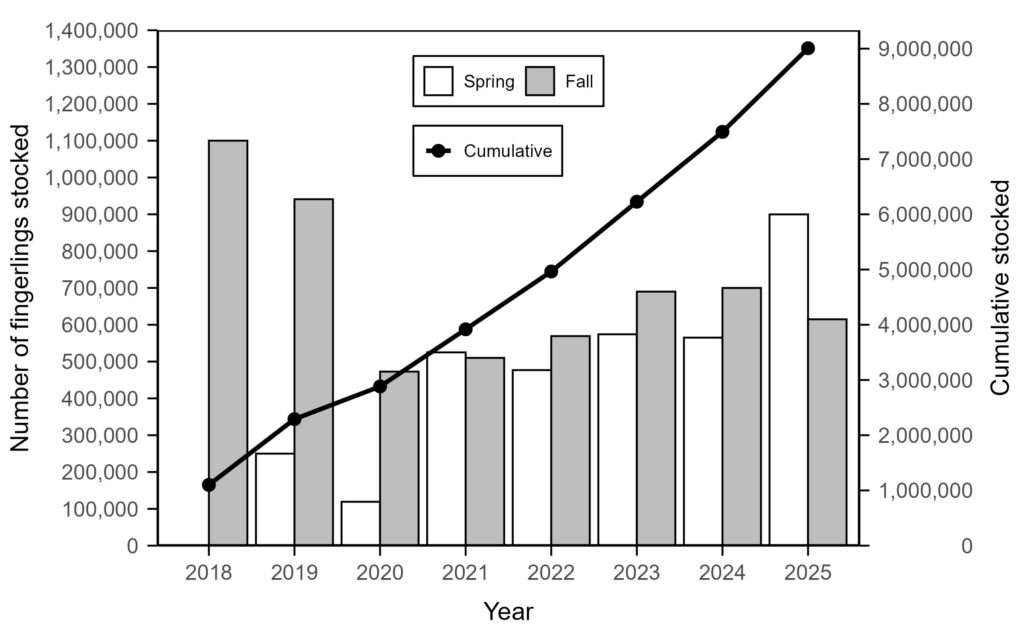
Beginning in 2018, U.S. Fish and Wildlife Service, in conjunction with several federal, state, and international partners, began stocking Cisco into Saginaw Bay. To date, over 9 million cisco have been stocked in the spring (about 65 mm or 2.5 inches in length) and fall (about 100 mm or 4 inches). Stocked fish from each season are differentially marked to assess when survival is better. Several agencies are collaborating to evaluate survival of these stocked fish, and more than 75 have been recaptured to date. One key milestone yet to be documented is natural reproduction by stocked Cisco.
Numbers of Cisco Stocked in Saginaw Bay
The chart below shows the number of cisco stocked in the spring and fall of 2018 through 2025. In total, 9.1 million cisco have been stocked in Saginaw Bay since 2018.
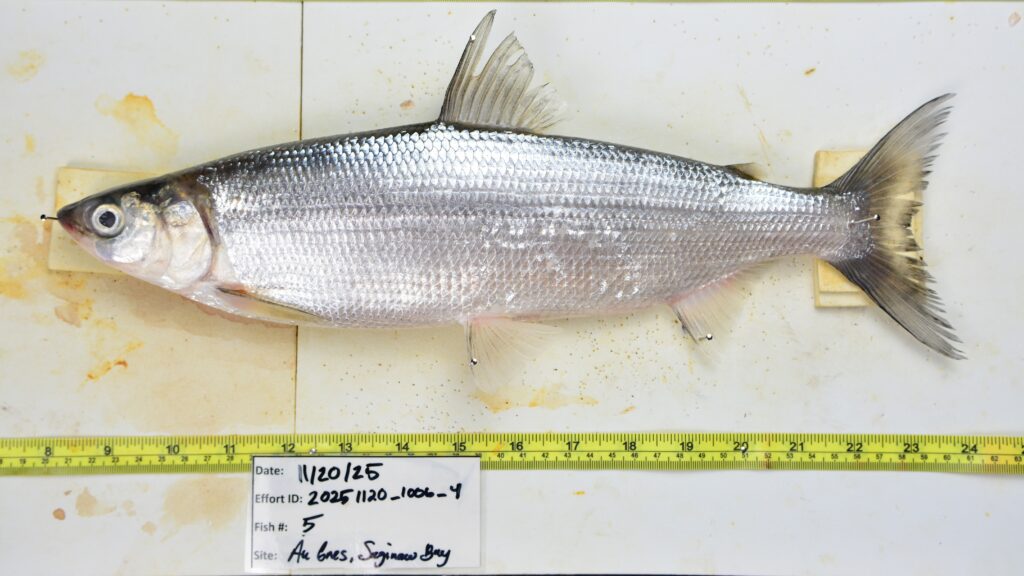
Captures of Adult Cisco in Saginaw Bay
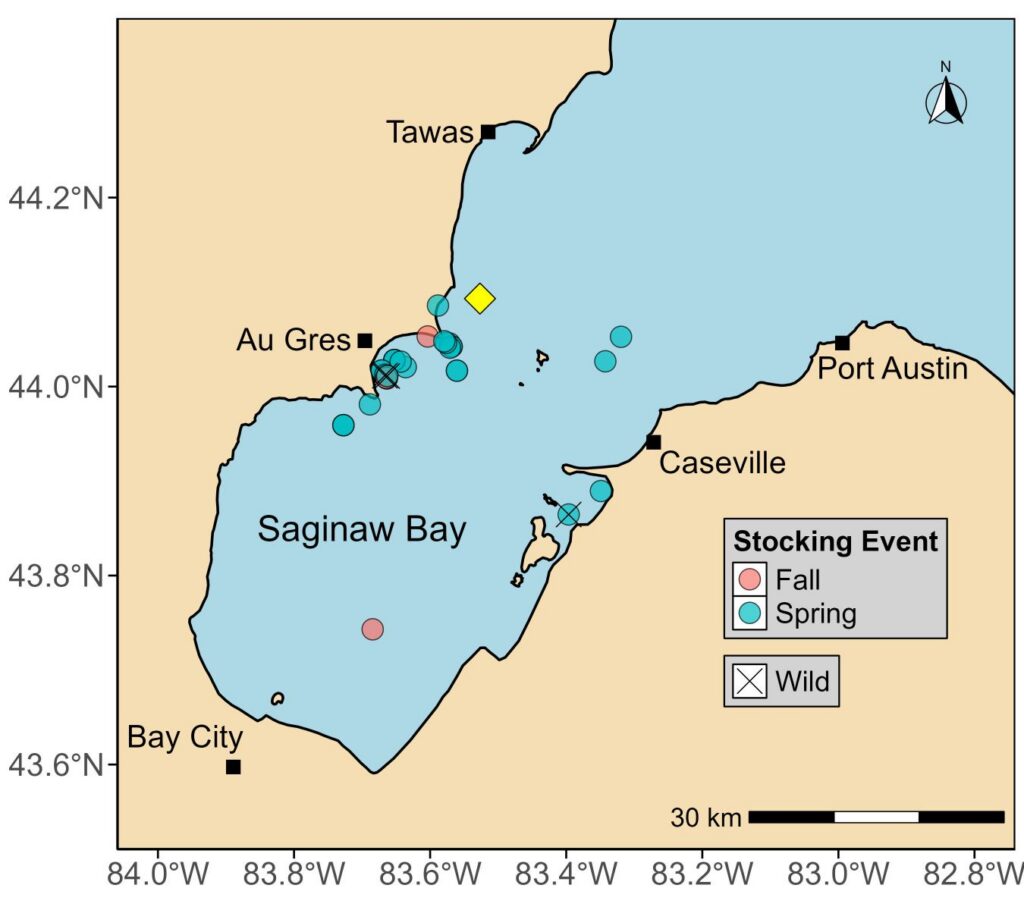
Hatchery-reared cisco marked with oxytetracycline (OTC) were recaptured at multiple locations throughout Saginaw Bay, with concentrations along the eastern and northern shorelines. The spatial distribution of these recaptures indicates that at least a portion of stocked individuals survived and dispersed within the system.
Two wild cisco were also captured at separate sites, overlapping with hatchery release areas, suggesting potential spatial interaction between stocked and wild fish. Notably, genetic analyses confirmed that these individuals originated from Bruce/Saugeen Peninsula stocks and were collected at the same spawning locations as putative hatchery-reared fish. This observation raises the possibility that wild individuals may be responding to environmental or social cues associated with stocked fish, potentially imprinting on similar spawning locations. Understanding contemporary spawning behavior is a critical step toward the successful restoration of cisco populations in Saginaw Bay.